_edited.jpg)
University of Porto

With roots that date back to the 18th century and a combination of training experiences that would be projected into the future University, the U.Porto was formally established on March 22, 1911, shortly after the establishment of the Republic in Portugal.
Initially, the U.Porto was structured into two faculties: Sciences and Medicine . Still during the 1st Republic, the Technical Faculty was created in 1915 (renamed the Faculty of Engineering in 1926), the Faculty of Arts in 1919 and the Faculty of Pharmacy in 1925.
The growth of the U.Porto would, however, be halted during the period of dictatorship that prevailed in Portugal between 1926 and 1974. In 1928, the Faculty of Arts was closed down, only to be reopened in 1961. In fact, only the Faculty of Economics (1953) was truly founded from scratch during this period.
After the April Revolution of 1974, and until the end of the 20th century, the U.Porto finally embarked on an expansion route. The six existing faculties were joined by eight more: the School of Medicine and Biomedical Sciences (1975), the Faculty of Sports (1975), the Faculty of Psychology and Educational Sciences (1977), the Faculty of Architecture (1979) , the Faculty of Dental Medicine (1989), the Faculty of Nutrition and Food Sciences (1992), the Faculty of Fine Arts (1992) and the Faculty of Law (1994).
Currently, the University of Porto is a public foundation under private law that enjoys statutory, pedagogical, scientific, cultural, administrative, financial, patrimonial and disciplinary autonomy.
Coimbra University

By signing the “Scientiae thesaurus mirabilis”, D. Dinis created the oldest University in the country and one of the oldest in the world. Dating from 1290, the document gives rise to the General Study, which was recognized in the same year by Pope Nicholas IV. It began operating in Lisbon, being definitively transferred to Coimbra in 1537, by order of King D. João III, after a period of migration between these two cities. It is in the Paço Real da Alcáçova, later Paço das Escolas, that all the Faculties of the University of Coimbra are concentrated – Theology, Canons, Laws and Medicine.
Initially confined to the Royal Palace, the University spread throughout Coimbra, modifying its landscape, turning it into a university city, expanded in the 20th century with the creation of Pole II, dedicated to engineering and technology, and already in this century with a third Hub, in the area of health sciences.
Today, the University of Coimbra has eight Faculties (Literature, Law, Medicine, Science and Technology, Pharmacy, Economics, Psychology and Educational Sciences, Sports Sciences and Physical Education) and more than 22 thousand students.
Studying at the University of Coimbra is to continue the history of the country's intellectual matrix, which formed the most outstanding personalities in culture, science and national politics.
With an undeniable historical heritage, the University of Coimbra celebrates its 730th anniversary in 2020. Boasting a unique material and immaterial heritage, fundamental in the history of European and global scientific culture, it has been a UNESCO World Heritage Site since 2013.
Aveiro University
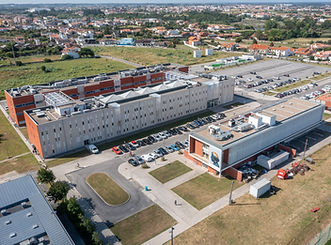
On December 15, 1973, the University of Aveiro (UA) began its journey with a speech by the then Minister of National Education, José Veiga Simão, marking the beginning of an institution that would transform the educational scenario in Portugal. With the first Rector, Victor Simões Gil, UA opened its doors to the public in the 1974/1975 academic year, offering pioneering courses such as Electronics and Telecommunications to 46 students.
Since then, UA has stood out for its innovative approach, introducing courses in areas previously unexplored by traditional higher education institutions, such as Environmental Studies and various teacher training courses. This pioneering spirit was also reflected in the creation of the Integrated Teacher Training Center (CIFOP), in 1977/1978, the first in the country.
In the 1980s, the UA went through a phase of consolidation, defining internal regulations and acquiring land for the future University Campus of Santiago. The Universities Autonomy Law, in 1988, allowed the UA to consolidate its organic structure and ratify its statutes the following year.
In the following years, UA expanded its borders, collaborating internationally and expanding its educational offering to include areas such as Environment, Industrial Management and Music. Furthermore, it strengthened its cooperation with society, promoting the transfer of knowledge, technology and innovation to the business sector.
Over the years, UA has maintained its commitment to quality, investing in cutting-edge infrastructure and offering excellent work spaces and teaching conditions. Under the leadership of Paulo Jorge Ferreira, elected Rector in 2018, UA continues its successful trajectory, consolidating its position as an international reference institution in the academic scenario.
University of Lisbon

The University of Lisbon is an educational and scientific institution, based on the creation, transmission and social and economic valorization of knowledge and culture, committed to the progress of society.
Vision: ULisboa intends to promote its cohesion and identity spirit, attract the best students, promote ULisboa's interaction with the productive fabric and public authorities, promote the rejuvenation, qualification and mobility of Human Resources, strengthen intervention capacity and influence of ULisboa in strategic international spaces, ensure the consolidation of a Quality Management System, create cultural offer for the University and the City of Lisbon, promote social responsibility and sports, health and well-being activities at ULisboa as well as improving the infrastructure available to the academic community.
Accepting the responsibility of making the city of Lisbon one of the great European capitals of culture and science, ULisboa receives more than 9,500 international students every year, around 18.7% of the total number of students, coming from more than 100 countries, who are looking for a high quality education, as well as the culture, climate and hospitality that Lisbon, and Portugal, have to offer.
ULisboa is the largest University in Portugal and one of the largest in Europe. Located in the heart of the city, it offers its entire community one of the best and most diverse training offers and promises to be a unique enriching experience .